
Once upon a time, a very long time ago, there was a terrible pandemic which left people so devastated that they were not able of eating, talking, and even less to take advantage of the wonderful landscape they were surrounded by. It was as if all the villagers had lost their souls because of fighting and had left just their bodies.
Pecem was a lovely old woman, always with a solution for every problem that faced her. Gossiping tongues said she was all days making spells and with sorcery things.
One night when everyone was home (even people who left their work very late) and there was an absolute silence when suddenly a brightness came across as a shooting star. After that, a light sound that everyone noticed came from Pecem’s house. Although the situation they had passed, fear was the only thing which traveled through their veins, so no one dared to step out of their houses to see what was happening.
In the morning under the sunrays, the earliest rising person in town was already going to work. As it was usual due to the terrible situation they were living, we walked through the street without pronouncing any word, and even without singing those songs which used to wake up nicely the rest of the town. Until something suddenly made him stop. Where previously had been an enormous house, now it was covered by vegetation and something yellow could be seen through the weeds. Pecem’s house was not there! He carefully approached the yellow thing, and when as he was near to see what he had seen at the distance, he realized it could be a suitcase. But, a yellow suitcase? He approached even more, with more fear than shyness and he kept watching it for a while, without knowing what to do.
Suddenly, a buzz came out from the interior of the suitcase, as if it was like the movement from a little animal. With his curiosity overcoming his fear, he could not do anything else than open it just in case a little animal had been trapped inside.
Can someone imagine what was inside the suitcase? Well, it is great you have tried, my consentidos, although you haven’t approached reality. A book was inside of it! He sat down under a tree and while he read, he watched the illustrations from the inside of the book. He wasn’t aware of how much time did he spent there reading and memorizing every single page, but when he finished, he realized his eyes had turned happy again, and without knowing it, he started to sing again his old songs.
Due to the happiness the book had given him, he put it back very carefully on the yellow suitcase and decided it was time to make everything with hope and excitement.
When he arrived home, he tried to tell his family about what had happened, and even though he did not have the right words, his family didn’t mind. The only thing they cared about was that something inside him had changed, and that overwhelming happiness and excitement got to every member of his family.
Days were passing by, and in every sunrise, a new family added to this endless happiness of remembering what was really important, leaving aside their painful past.
That yellow suitcase has the power of travel visiting people who most need some encouraging words, and to teach them that having hope and feeling like going for it, everyone can succeed.
We could learn something from this story, and you, my consentidos, cannot deny me that it is very similar to the situation we are actually living. Pecem has come back to us as this La Salle’s group to show us how is love and hope moving our planet. Because of it, we have prepared you a lot of surprises and we wish you enjoy them as much as we have. One of your missions will be to look for the yellow suitcase in every corner of our web, but will it be in all of them?
We wish everything is very useful for you, and that you keep telling us how you are living it. We are sure you ill somehow find out how to make us know.
WELCOME, MY CONSENTIDOS
Una vez hace muchos, muchísimos años, hubo una terrible pandemia que dejó a la gente tan avasallada que eran incapaces de comer, hablar y mucho menos de disfrutar del maravilloso paisaje que les rodeaba. Era como si todos los aldeanos hubiesen perdido sus almas de tanto luchar y solo quedasen sus cuerpos.
Pecem era una mujer de avanzada de edad, encantadora y siempre con una solución ante todo tipo de problemas. Según contaban las malas lenguas se pasaba todo el día haciendo hechizos y con temas de brujería.
Una noche cuando ya estaban todos en casa (incluso las personas que más tarde salían de trabajar) y el silencio se hacía eco en los oídos de todos, hubo un resplandor que pasó como una estrella fugaz. Tras eso, un leve sonido que a nadie le pasó desapercibido parecía provenir de la casa de Pecem. Aunque dada la situación por la que habían pasado, el miedo era lo único que corría por las venas de los aldeanos y nadie se atrevió a asomarse.
Bajo los primeros rayos de sol, el más madrugador ya se dirigía a trabajar. Como era de costumbre debido a terrible situación, andaba sin pronunciar palabra y sin canturrear aquellas canciones que solían ser el dulce despertar del resto de los vecinos. Hasta que algo le hizo pararse en seco. Donde antes estaba una enorme mansión, ahora había vegetación y algo amarillo que podía entreverse en la maleza. ¡No quedaba ni rastro la casa de Pecem! Se acercó muy cautelosamente y cuando estaba casi a un palmo de distancia, se dio cuenta de que eso amarillo que había atisbado a lo lejos parecía una maleta. ¿Pero una maleta de color amarillo? Se acercó aún más, eso sí, con más miedo que vergüenza y aunque se quedó observándola durante unos instantes, no sabía qué hacer…
De repente un zumbido brotaba del interior de la maleta, era como el movimiento de un pequeño animal. Ante esto y como su curiosidad superaba a su miedo, no pudo hacer otra cosa que no fuese abrirla por si dentro se había quedado atrapado algún animalillo.
¿Alguno puede imaginarse lo que había dentro? Bueno, está bien que lo hayáis intentado mis consentidos, aunque no os habéis acercado mucho a la realidad… ¡Lo que había dentro era un libro! Se sentó debajo de la sombra de un árbol y mientras leía, observaba las ilustraciones de aquella maravilla. Quizá pasaron solo unos minutos, o quizá pasaron horas, pero tras releer y memorizar cada una de sus páginas, sus ojos volvieron a cobrar ilusión y sin darse cuenta se escuchó a si mismo canturrear sus queridas canciones.
Era tal la alegría que le había aportado aquel libro que lo volvió a guardar dentro de esa extraña maleta con sumo cuidado, y decidió que ya era hora de volver a hacer las cosas con ilusión.
Cuando llegó a su casa le intentó contar a su familia lo que le había ocurrido y aunque no daba con las palabras correctas, a su familia le dio igual. Lo único que les importaba era que algo en su interior había vuelto a florecer y esa inmensa felicidad e ilusión consiguió contagiársela a cada uno de ellos.
Iban pasando los días y en cada nuevo amanecer, una nueva familia se unía a esa infinita felicidad de recordar lo que verdaderamente era importante, dejando atrás el doloroso pasado.
Y es que nuestra maleta tenía el poder de ir viajando, de ir visitando a las personas que más necesitaban unas palabras de aliento y de enseñarles que, con ilusión y ganas de seguir hacia delante, todo se puede superar.
Tal vez podremos aprender algo de esta historia y es que, lo que no podéis negarme mis consentidos, es que guarda un ligero parecido con la situación que actualmente estamos viviendo. Pecem se ha reencarnado en este grupo de infantil de La Salle, para poder mostraros que es el amor y la ilusión la que mueve el mundo. Por ello os hemos preparado muchas sorpresas y esperamos que las disfrutéis tanto como nosotras hemos disfrutado haciéndolas. Uno de vuestros encargos será buscar la maleta viajera en cada uno de nuestros rincones de lectura ¿pero estará en todos?
Esperamos que todo esto os sirva de gran ayuda y que nos vayáis contando cómo lo estáis viviendo (seguro que encontráis el modo de hacérnoslo llegar)
BIENVENIDOS, MIS CONSENTIDOS
Without further delay, here are some book recommendations for you to complete your library. But not only we have written the book's title and where can you get it. We briefly tell you what are they about and what things we have taken into account when selecting it so that you can make a good choice. But before that, it's important that you know the difference between literary, paraliterary, and non-literary books because not all of them have the same use. Surprised? You may not even know what we are talking about, but we can assure you when you read the next paragraph you will understand everything.
When we are talking about children's literature, we are talking about the books we use in our classroom for kids to listen to and enjoy. With literary texts, our only objective is making them enjoy the texts, and through questions, we can make them interact. Literature can be symbolic depending on your own mental scheme. If we work them correctly, we will take children to literary symbolism, which is, in other words, teaching how literature can be read. The child on his own, through indirect education, can give his point of view of the situation and can freely judge the character's actions or what they do in the story.
In order for a book to be considered literary, the following characteristics must be followed:
1. It has to be artistic.
2. Predominates poetic function.
3. Belong to one of the three literary genres: narrative, prose, or theatrical text.
4. It must be a fictional text, even if it is inspired by real facts.
On the opposite side, literary books (which are made for children to enjoy), paraliterary books, which at the beginning can look as if they were literary, tell us a story which has been created in order to teach or moralize. The first objective is the artistic one, destined for parents as well as for children. They can also have some kind of teaching or moralizing purpose. We can also find on this classification biographies for kids, which are told as a tale but in fact, they have happened in real life.
Finally, "teaching books", opposite to the previous ones, do not tell any story. They are just written to teach and inform, as instructive texts.
Now that you have this knowledge in your hands and you have almost turned into an expert, you will be able to make use of your widened criteria in order for you to choose the book that best suits what you are looking for.
Sin más dilación, aquí os dejamos algunas recomendaciones de libros para que completéis vuestra biblioteca. Pero no solo os hemos puesto el libro en cuestión y dónde podéis conseguirlo, sino que, además, os contamos de forma muy breve de qué trata y qué cosas hemos tenido en cuenta a la hora de seleccionarlos para qué podáis hacer una buena elección. Pero antes de eso, es importante que conozcáis la diferencia entre los libros literarios, paraliterarios y no literarios porque no todos tienen el mismo uso. ¿Sorprendidos? Puede que ahora ni siquiera sepáis de lo que os estamos hablando, pero os aseguramos que cuando leáis el siguiente párrafo lo sabréis.
Cuando hablamos de literatura infantil, hablamos de los libros que utilizamos en el aula para que los escuchen y disfruten. Con los textos literarios, nuestro único objetivo va a ser el disfrute de los textos y podemos, mediante interactuación (preguntas) ver cómo lo viven ellos. La literatura es simbólica según el esquema de pensamiento de cada uno. Si los trabajamos bien, le estamos llevando al niño al simbolismo literario, es decir, enseñar a leer literatura. Él mismo, mediante enseñanza indirecta, puede dar su visión de la situación y puede juzgar libremente las acciones de los personajes o de los hechos que sucedan.
Para que a un libro lo podamos considerar literario tiene que cumplir con las siguientes características:
-
Tiene que ser artístico.
-
Predomina la función poética.
-
Ha de pertenecer a uno de los tres géneros literarios: narrativa, prosa o texto teatral.
-
Tiene que ser un texto ficticio, incluso si está inspirado en hechos reales.
Al contrario que los libros literarios (que se utilizan para que los niños disfruten), los libros paraliterarios, que en un principio pueden parecer literarios, cuentan una historia cuyo fin es enseñar o moralizar. El objetivo prioritario es el artístico, tanto para padres como para niños. Pueden llevar tanto implícita como explícitamente una enseñanza o moraleja. También podemos encontrar en esta clasificación las biografías para niños, en las que se cuentan como si fuera un cuento pero en realida son hechos reales.
Por último, están los libros didácticos que al contrario que los dos anteriores, no cuentan ninguna historia. Simplemente están escritos para enseñar e informar, como los textos instructivos.
Ahora que ya tenéis el conocimiento en vuestras manos y estáis hechos casi unos expertos, podréis hacer uso de vuestro ampliado criterio para escoger el libro que mejor se adapta a lo que estáis buscando.
¿QUÉ DEBERÍAS SABER PARA CREAR UNA BIBLIOTECA DE AULA?
CRITERIOS ESTABLECIDOS EN LA BIBLIOTECA DE AULA
You may be wondering (or maybe not) what percentages we have used to create our classroom library. We have designed this taking into account that in our class we have a ratio of twenty-five students (if the ratio varies, it will also change the book's number) so in our classroom library, we will have a total of fifty books. This means that if all the children had to take home two books, none of them would run out of them. Having said this, our library is divided into:
-
60% literary books
-
40% non-literary (20% paraliterary books and 20% teaching books)
In addition, we have an extra percentage, in which according to the concepts we are working with, we will be acquiring books depending on the topics that we come up with. In this extra percentage, there are also books in other languages and books made by us.
Although it is not on these percentages, we want to make it clear that we are going to work folk texts, but as they are to tell and not to read, we won't need to have any of these books physically.
In the classroom’s library is very important to have a good distributed space, with renovated and comfortable furniture, and with sober colors so that they do not play down or be tiresome. In addition, light and neutral colors will give the impression that our corner or classroom’s library is bigger.
On the other hand, as we want them to decorate the space by themselves, by putting certain tones we would be reducing the possibilities of what they want to add to it. Shelves must be attractive considering their height, so that they can enhance their autonomy independently using this space without asking for help from an adult, and in which there are books that we have read or will do in the future. Books should be the ones in which they can feel reflected depending on the evolutionary moment they are going through.
It would also be desirable to have a novelty shelf, with a good and eye-catching signpost and a storytelling motivating space. We must always keep in mind that we have to create this space in a place where there is natural light and we must also have a support for cloudier days or in which we need a different lighting to give atmosphere in some story or work.
The welcoming and inviting atmosphere encourages you to search for a book and borrow it or read it in the library. It is necessary to invest part of the school library budget in renovating the library's reading environment and furniture, as all of this will have a positive impact on encouraging them to read.
Storytelling: we are going to deal with this issue from the point that being small we will be the ones who first read the stories to them. In addition, we will not only read them once, but several times (the number of times will depend on the curiosity that manages to awaken each story on them).
Books, those we have in class and the rest of them can be taken home so they can read them calmly. This aspect has been covered by the video of the cork of reviews (which you can see below). There we explain how they can take the books, and what order we can set so that they can be taken home.
Good luck mis consentidos, do not hesitate to write to us if you have any doubts, you want to ask us something or if you just want to make comments about it. We can't wait to know about your opinions.
Good luck mis consentidos, do not hesitate to write to us if you have any doubts, you want to ask us something or if you just want to make comments about it. We can't wait to know about your opinions.
Puede que os estéis preguntando (o puede que no) qué porcentajes hemos utilizado para crear nuestra biblioteca de aula. Nosotras nos hemos basado en que en nuestra clase tenemos una ratio de veinticinco alumnos (si variase la ratio, también variaría el número de libros) por lo que en nuestra biblioteca de aula tendremos un total de cincuenta libros. Lo que significa que, si todos los niños tuviesen que llevarse a casa dos libros, ninguno se quedaría sin sus ejemplares. Dicho esto, nuestra biblioteca se divide en:
-
60% libros literarios
-
40% no literarios (20% libros paraliterarios y 20% libros didácticos)
Además, contamos con un porcentaje extra en el que según los conceptos que estemos tratando, iremos adquiriendo libros en función de los temas que estén surgiendo. Dentro de este porcentaje extra, también se encuentran los libros en otros idiomas y los libros que están hechos por nosotras.
Aunque no entra dentro de estos porcentajes, queremos dejar claro que vamos a trabajar los textos folclóricos, pero como son para contar y no para leer, no necesitaremos tener ningún libro en cuestión.
En la biblioteca de aula es muy importante tener una buena distribución del espacio, mobiliario renovado y cómodo, colores sobrios para que no roben protagonismo ni resulten cargantes, además los colores claros y neutros harán que nuestro rincón o biblioteca de aula de la impresión de ser más grande. Por otra parte, como queremos que sean ellos quienes decoren el espacio, poniendo ciertos tonos estaríamos rebajando las posibilidades de lo que quieran poner. Las estanterías deben ser atrayentes teniendo en cuenta su altura, para que de manera independiente puedan potenciar su autonomía utilizando este espacio sin necesidad de pedir ayuda a un adulto, y en las cuales haya libros que hemos leído o lo haremos en un futuro. Los libros deben ser libros en los que ellos se puedan ver reflejados dependiendo del momento evolutivo que estén pasando. También sería conveniente contar con un estante de novedades, con una buena y llamativa señalización y un espacio motivador de cuentacuentos. Siempre debemos que tener presente que tenemos que crear este espacio en un lugar donde llegue mejor la luz natural y además debemos tener un refuerzo para días más nublados o que necesitemos una iluminación diferente para dar ambientación en algún cuento y obra.
El ambiente acogedor y atrayente anima a buscar algún libro y sacarlo en préstamo o leerlo en la biblioteca. Es necesario invertir parte del presupuesto de la biblioteca escolar en la renovación del ambiente lector y mobiliario de la biblioteca, ya que todo ello repercutirá positivamente en la animación a la lectura.
Cuentacuentos: nosotras vamos a abordar este tema desde el punto que al ser pequeños vamos a ser nosotras quiénes por primera vez les lean los cuentos. Además, no solo se los leeremos una vez, sino varias (la cantidad dependerá de la inquietud que consiga despertar cada cuento en ellos).
Los libros tanto los que contemos en clase como el resto, podrán llevárselos a casa para poder leérselos ellos en tranquilidad o para que se los lean en casa. Este aspecto lo hemos tratado el vídeo del corcho de las opiniones (que podréis ver un poco más abajo). Ahí explicamos como pueden coger los libros, y que orden establecemos para que se los puedan llevar a casa.
Mucha suerte mis consentidos, no dudéis en escribirnos si os surge alguna duda, queréis consultarnos algo o simplemente si queréis comentarlo. Estamos ansiosas por descubrir vuestras opiniones.
Un buen ambiente, tranquilo y motivador, anima a la lectura. Este ambiente puede ser creado en un rincón en el aula o en la biblioteca escolar.
OUR BOOK SELECTION

Tittle/título: ¿A qué sabe la luna?
Author/autor: Michael Grejniec.
Translator/traductor: Carmen Barreiro.
Publisher/editorial: Kalandra Publishing House.
Illustrator/ilustrador: Michael Grejniec.
Link to buy it/enlace de compra:
https://www.amazon.es/sabe-luna-libros-para-so%C3%B1ar/dp/8484645649
This story tells us the strategies that animals use to find out what the moon tastes like. Thanks to the unsightly illustrations that it has and to that are made in watercolors on papier Mache, it achieves a very magical effect to the eye, which undoubtedly attracts the attention of children and allows them to understand and get into the story. Besides, the illustrations show what is always happening in the story. On the other hand, it has a cumulative and repetitive structure which makes it very simple for them to follow the story. The characters are animals, which make the story more entertaining.
Esta historia nos cuenta las estrategias que utilizan unos animales para descubrir a qué sabe la luna, por lo tanto, el tema principal de este libro es el descubrimiento.
Gracias a las ilustraciones no estereotipadas que tiene y a que están realizadas en acuarelas sobre papel maché, logra un efecto muy mágico a la vista, lo que sin duda atrae la atención de los niños y les permite entender y vivir la historia. Además, las ilustraciones muestran lo que va sucediendo en la historia a cada momento. Por otro lado, tiene una estructura acumulativa y repetitiva lo que lo hace muy sencillo que puedan seguir la historia. Los personajes son animales, y el niño se puede identificar con cualquiera de ellos ya que tiene un pensamiento animista, pero lo hará más con el ratón, porque a pesar de ser el más pequeño, con la ayuda de todos los demás, es el que consigue con ayuda de todos alcanzar la luna y probarla. Dándole también un pedazo a los demás.

Tittle/título: Mimo Exprés
Author/autor: Emile Jadoul.
Translator/traductor: Rafael Ros.
Publisher/editorial: Corimbo.
Link to buy it/enlace de compra:
https://www.casadellibro.com/libro-mimo-expres/9788484704560/2037011
This story tells us about the life of a child and his P.A.V. (High Speed Dad). The P.A.V always must go down and he barely has time to spend it with his son. The child, instead of resigning himself to the express pampering, finds another alternative and ends up getting to pay attention for more than two minutes in a row. Above all, it is a good choice to know the individual situations of our children and a good method to reflect on those situations. On the other hand, the illustrations are not stereotyped and although they are not very detailed, they perfectly match the story. Their colors are always pastel tones in perfect match that will not saturate the children’s senses but will remain or take him to a state of peace and calm. It is very enjoyable, and the touch of humor with which this story is written makes them maintain attention and intrigue.
Esta historia nos cuenta la vida de un niño y su P.A.V. (Papá de Alta Velocidad). El P.A.V siempre tiene que trabajar y apenas le queda tiempo para dedicárselo a su hijo. El niño, en vez de resignarse a los mimos exprés busca otra alternativa y acaba consiguiendo que le presten atención durante más de dos minutos seguidos. Además, el niño se puede identificar con el protagonista ya que el conejito habla, piensa y siente como un niño real, y cualquier niño real quiere la atención constante de su familia, en este caso, representada por su padre, pero podría ser cualquier adulto de referente. Es una buena opción para conocer las situaciones individuales de nuestros niños y un buen método para reflexionar sobre dichas situaciones. Las ilustraciones no son estereotipadas y aunque no están muy detalladas, acompañan perfectamente a la historia. Los colores del libro son siempre tonos pastel en perfecta concordancia que no van a saturar los sentidos del niño, sino que le van a mantener o a trasladar a un estado de calma y tranquilidad. Es muy amena y el toque de humor con el que está escrita esta historia, hace que mantengan la atención y la intriga.

Tittle/título: An Adventure with Charlie Chick/Una Aventura con el Pollito Tito.
Author/autor: Maurice Pledger.
Publisher/editorial: SM Editions.
Illustrator/ilustrador: Maurice Pledger.
Link to buy it/enlace compra:
https://www.amazon.com/Adventure-Charlie-Chick-Peek-Find/dp/1571450718
While Charlie Chick goes in search of his brothers, he will make many friends of other species. It's a good option for them to enjoy the story as they interact with the story and discover the surprises that await inside. It is about several animals and the illustrations are very realistic, which draws a lot of attention and allows them to establish connections with reality. In addition, the illustrations are made in pastel tones and in more vivid tones, while maintaining the visual balance.
Mientras el pollito Tito va en busca de sus hermanos, hará muchos amigos de otras especies. Es una buena opción para que disfruten de la historia mientras interactúan con el cuento y descubren las sorpresas que aguarda en su interior. Trata sobre diversos animales y las ilustraciones son muy realistas, lo que llama mucho su atención y les permite establecer conexiones con la realidad. Aquí los niños se pueden identificar con el pollito ya que se presentan las características evolutivas de un niño de alrededor de 3 años. Además, las ilustraciones están realizadas en tonos pastel y en tonos más vivos, mientras se mantiene el equilibrio visual.

Tittle/título: Adivina cuanto te quiero.
Author/autor: Sam McBratney.
Translator/traductor: Esther Rubio Muñoz.
Publisher/editorial: Kokinos.
Illustrator/ilustrador: Anita Jeram.
Link to buy it/enlace de compra:
https://www.amazon.es/Adivina-cuánto-quiero-Sam-McBratney/dp/8488342063
This story tells us everything a little hare does to show the big guy how much he loves him. The main theme is the affection between a child and his reference people (small hare and large hare). Children at these ages are given this type of games. They tend to make differences between much and little, and in most cases express it with their body. The language is perfect for children, it uses simple phrases that make you have a simple understanding.
Esta historia nos cuenta todo lo que hace una pequeña liebre para demostrarle a la grande cuánto le quiere. El tema principal es el afecto que hay entre un niño y sus personas de referencia (liebre pequeña y liebre grande). Los niños a estas edades se plantean este tipo de juegos, y suelen marcar diferencias entre mucho y poco, y en la mayoría de los casos lo expresan con su cuerpo. Por ello, los niños se pueden identificar con la liebre pequeña y pueden identificar en la liebre grande a cualquier adulto al que quiera expresar su cariño. El lenguaje es perfecto para los niños, utiliza frases simples que hacen que tenga una sencilla comprensión.

Tittle/título: Mi papá.
Author/autor: Coralie Saudo.
Illustrator/ilustrador: Kris di Giacomo.
Publisher/editorial: Kokinos.
Link to buy it/enlace de compra:
https://www.amazon.es/Mi-Papá-Coralie-Saudo/dp/8492750650
The book is about a big, strong dad who doesn't want to go to sleep. It is a book with illustrations that faithfully reflect what is written on each page. It covers evolutionary aspects of childhood age such as the worry of going to sleep. In this case there is a change of roles, the father is the one who does not want to go to sleep, and the child is the one who has to mediate to get it. It also addresses other issues such as the family environment and the penchant for the "magical" interpretation of reality.
El libro trata de un papá, grande y fuerte, que no quiere irse a dormir. Es un libro con ilustraciones que reflejan fielmente lo que está escrito en cada página. Cubre aspectos evolutivos de la edad infantil como la preocupación de irse a dormir. En este caso hay cambio de roles, el padre es el que no quiere irse a dormir, y el niño es el que tiene que mediar para conseguirlo. Además aborda otros asuntos como el entorno familiar y la inclinación por la interpretación “mágica” de la realidad. Esta historia los niños la van a disfrutar mucho porque a ellos les gusta cambiar los roles y ver como el niño es el que duerme al papá es un juego muy típico en los niños de 2 a 4 años.

Tittle/título: Este monstruo me suena.
Author/autor: Gabriela Keselman.
Publisher/editorial: La Galera.
Illustrator/ilustrador: Emilio Urberuaga.
Link to buy it/enlace de compra:
https://www.casadellibro.com/libro-este-monstruo-me-suena/9788424639082/997057
This book hides a very funny and hilarious story. Furthermore, children enjoy each other very much as they find out all the tricks the monster is doing, until they discover their true identity. The illustrations are very striking, are not stereotyped or recharged, and perfectly accompany the story. It is an ideal book for us to read with a humoristic tone of voice and that you will definitely enjoy.
Este libro esconde una historia muy graciosa y sorprendente. Los niños disfrutan mucho mientras van averiguando todas las artimañas que el monstruo va haciendo, hasta que descubren su verdadera identidad. Las ilustraciones son muy llamativas, no son estereotipadas ni están recargadas, y acompañan perfectamente a la historia. Aquí, tanto el personaje del padre como el del niño, están muy bien descritos en las imágenes y en el texto, por una parte, el niño se puede identificar con el protagonista y, por otra, aunque aquí el que aparece es el papá, el monstruo puede ser cualquier otra persona. Esto para los niños es un juego, y al ser así, les involucra mucho ya que en estas edades el juego es prioritario para conocer la realidad. Es un libro ideal para que se lo leamos con una entonación humorística y del que sin duda van a disfrutar.

Tittle/título: Las palabras dulces.
Author/autor: Carl Norac.
Illustrator/ilustrador: Claude K. Dubois.
Publisher/editorial: Corimbo.
Lola, our protagonist gets up in the morning with her mouth full of sweet words, and has a tremendous need to say them, but by different circumstances she has no chance to do so. It's a story that will teach us all the importance of showing our feelings. It's a beautiful book of emotions and tenderness. It has beautiful pastel-toned illustrations that match the narrative of the story.
Lola, nuestra protagonista se levanta por la mañana con la boca llena de palabras dulces, y tiene una necesidad tremenda de decirlas, pero por diferentes circunstancias no tiene oportunidad de hacerlo. En este caso, la protagonista refleja la psicología evolutiva de los niños de esta edad, y en concreto, de cuando los niños se enfadan porque los mayores no están pendientes de ellos. Es una historia que nos habla a todos de la importancia de mostrar nuestros sentimientos. Es un bonito libro de emociones y de ternura. Tiene unas preciosas ilustraciones en tonos pastel, que van en concordancia con la narrativa de la historia.

Tittle/título: Las princesas también se tiran pedos.
Author/autor: Ilan Brenman.
Illustrator/ilustrador: Ionit Zilberman.
Publisher/editorial: Algar Editorial.
Link to buy it/enlace de compra:
https://www.amazon.es/princesas-tambi%C3%A9n-tiran-%C3%81lbumes-ilustrados/dp/8498453151/ref=sr_1_1?__mk_es_ES=%C3%85M%C3%85%C5%BD%C3%95%C3%91&crid-3UKJVVL0IB126&dchild-1&keywords-the+princesses+also+se+tiran+farts&qid-1588090271&s-books&sprefix-las+princesses+ta%2Cstripbooks%2C155&sr-1-1
This book is about a girl's doubt: do princesses fart too? Fortunately, his father, through a secret book, answers all his questions. In addition, children can be curious because they are about princesses, a subject that is often the order of the day for them. On the other hand, try to break stereotypes about princesses by making them more human and close to us.
Este libro trata sobre una duda que tiene una niña: ¿las princesas también se tiran pedos? Afortunadamente, su padre, a través de un libro secreto, responde a todas sus preguntas. Además, a los niños les puede causar curiosidad porque trata de princesas, un tema que para ellos suele estar a la orden del día. Por otra parte, trata de romper los estereotipos sobre las princesas haciéndolas más humanas y cercanas a nosotros. Es un libro que habla de un tema que es muy divertido para los niños y trata los contenidos humorísticos que se pueden ver en un aula infantil.

Tittle/título: Ramón preocupón.
Author/autor: Anthony Brown.
Illustrator/ilustrador: Anthony Brown.
Publisher/editorial: A La Orilla Del Viento.
Link to buy it/enlace de compra:
This book is about Ramon, who is a very fearful and concerned child. Fortunately, your grandmother has a solution to this... This book discusses issues such as externalizing feelings and learning to let others help us. In addition, they can feel very identified with the character because they are situations that may be living them.
Este libro trata sobre Ramón, el cual es un niño muy miedoso y con muchas preocupaciones. Afortunadamente, su abuela tiene una solución a esto…A pesar de ser un libro antiguo, nos parece muy actual ya que los niños de ahora se siguen preocupando y teniendo la cabeza llena de cosas. Este libro trata asuntos como exteriorizar los sentimientos y aprender a dejar que los demás nos ayuden. Además, se pueden sentir muy identificados con el personaje debido a que son situaciones que pueden estar viviendo ellos.

Tittle/título: De verdad que no podía.
Author/autor: Gabriela Keselman.
Illustrator/illustrador: Naomi Villamuza.
Publisher/editorial: Kokinos.
Link to buy it/enlace de compra:
https://www.amazon.es/Verdad-Que-No-Podía/dp/8488342314
The illustration on the cover gives us clues to what the book is about. The main theme is fear before bedtime and how to deal with it. This is an aspect that some children are often concerned about, as irrational terrors appear in socio-affective development. They also address a very important issue which is the attachment to our reference figure. The images we're going to find are in total harmony with what they're telling us.
La ilustración de la portada nos da pistas para saber de qué trata el libro. El tema principal es el miedo antes de irse a dormir y la manera de afrontarlo. Éste es un aspecto que suele preocupar a algunos niños, ya que aparecen los terrores irracionales en el desarrollo socioafectivo. También abordan una cuestión muy importante que es el apego a nuestra figura referente. Las imágenes que vamos a encontrar están en total armonía con lo que nos van narrando.

Tittle/ título: ¡No quiero ir a dormir!
Author/ Autor: Julie Sykes.
Illustrator/ Ilustrador: Tim Warnes.
Publisher/ Editorial: Juventus.
Link to buy it/ Enlace de compra: https://www.amazon.com/-/es/Julie-Sykes/dp/8426130100
Little Tiger has a hard time sleeping at night. When it’s time to go tobed, he wants to visit his friends and run in the jungle. One night, he got away with it but it didn’t work out as expected for Little Tiger. This is a good book for kids because most of them don’t want to sleep. They think that there are lots of interesting and enjoyable things that happen after they go to bed. Furthermore, it has unrealistic and live tones illustrations.
A Pequeño Tigre le cuesta mucho dormirse por las noches. Cuando llega la hora de ir a dormir quiere visitar a sus amigos y correr en la selva. Y aunque una noche lo consigue, no sale como Pequeño Tigre esperaba. En este libro los niños se pueden sentir muy identificados ya que muchos de ellos no quieren dormir porque piensan que cuando lo hacen pasan un montón de cosas super interesantes y divertidas que se van a perder. Además, los colores de las ilustraciones poco realistas y en tonos muy vivos, como en la naturaleza.

Tittle/ título: ¡Feliz cumpleaños Vivi!
Author/ Autor: Anke de Vries.
Illustrator/ Ilustrador: Jung-hee spetter.
Publisher/ Editorial: Fondo de cultura económica México.
Link to buy it/ Enlace de compra: https://www.amazon.es/%C2%A1Feliz-cumplea%C3%B1os-Vivi-Orilla-Viento/dp/9681654188
Vivi is a little pig so shy that each time that the other animals go to play, she scapes to other place. In a dream Vivi realized that she doesn’t want to be alone anymore so the rest of the animals help her. This book deals with themes like shyness, the friendship and the fear of Vivi about scaping from the confort area. It has a simple and linear structure. The story has realistic, big and pastel shades illustrations which complement the text.
Vivi es una cerdita tan tímida que cada vez que los demás animales se van a jugar, huye. En un sueño, Vivi se da cuenta de que no quiere estar más sola y el resto de animales deciden ayudarla. Este libro aborda asuntos como la timidez, la amistad y el miedo de Vivi a salir de su zona de confort. Y al identificarse los niños con la protagonista, podrían encontrar respuestas a sus miedos a relacionarse, su timidez… Tiene una estructura sencilla y lineal. Las ilustraciones son realistas, grandes y de tonos pastel que van dando vida a la historia y complementando al texto.

Tittle/título: Te echo de menos.
Author/autor: Laura Espot.
Illustrator/ilustrador: Rosa Sández Abella.
Publisher/editorial: La Galera – sin palabras.
Link to buy it/enlace de compra:
This book tells us about a child whose father gives an adopted puppy so that he doesn't get bored, but he soon takes it back to the animal shelter when he sees that the puppy is not getting the treatment he deserves. This book covers issues such as the importance of caring for the things we have, or the responsibility of adopting and having pets in our care.
Este libro nos habla de un niño al que su padre le regala un perro adoptado para que no se aburra, pero pronto lo devuelve cuando ve que el perrito no está recibiendo el trato que se merece. El protagonista de la historia es un niño que actúa como un niño, es decir, es egoísta, egocéntrico, no es consciente que con sus actuaciones hace daño al perrito y puede herirles, y por eso, el niño se puede ver identificado con él. Este libro trata asuntos como la importancia de cuidar las cosas que tenemos, o la responsabilidad que conlleva adoptar y tener mascotas a nuestro cargo.

Tittle/ Título: Pequeño azul y pequeño amarillo.
Author/ Autor: Leo Lionni.
Illustrator/ Ilustrador: Leo Lionni.
Publisher/ Editorial: Kalandraka.
Link to buy/ Enlace de compra:
https://www.amazon.es/s?k=julieta+estate+quieta&i=digitaltext&__mk_es_ES=%C3%85M%C3%85%C5%BD%C3%95%C3%91&ref=nb_sb_noss_1
This book is a very simple story in which the protagonists are blue and yellow, and they discover a new color by hugging each other. In the book we find the values of friendship and family unity, and the story, being characters that are rarely used, can be more entertaining. Also, the illustrations have very vivid colors and children can easily follow the story by having large illustrations.
Este libro es una historia muy simple en la que los protagonistas son el color azul y el color amarillo, y descubren un nuevo color al darse un abrazo. En el libro encontramos los valores de la amistad y la unión de la familia, y la historia, al ser unos personajes que pocas veces se usan, puede resultar más entretenida. Los niños se pueden identificar tanto con pequeño azul como con pequeño amarillo porque está hablando de cómo cuando queremos a alguien, le damos algo al igual que esa persona nos da algo a nosotros con el fin de expresar cariño. Además, las ilustraciones tienen colores muy vivos y los niños pueden seguir muy fácilmente la historia al tener ilustraciones grandes.
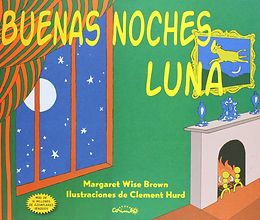
Tittle/ Título: Buenas noches, Luna.
Author/ Autor: Margaret Wise Brown.
Illustrator/ Ilustrador: Clement Hurd.
Publisher/ Editorial: Corimbo.
Link to buy/ Enlace de compra:
The protagonist, who is the little bunny, says good night to various things in his room before going to sleep. The main theme is children's routines before going to bed. The illustrations in this book are not stereotyped, soft colors predominate, and children can easily follow and understand the story thanks to the illustrations.
El protagonista, que es el conejito, va dando las buenas noches a varias cosas de su habitación antes de irse a dormir. El tema principal son las rutinas de los niños antes de irse a la cama. Este libro es para edades más pequeñas de entre 2 y 4 años. Las ilustraciones de este libro no son estereotipadas, predominan los colores blandos y los niños pueden seguir y comprender la historia fácilmente gracias a las ilustraciones.

Tittle/ título: El león que no sabía escribir.
Author/ Autor: Martín Baltscheit.
Illustrator/ Ilustrador: Martín Baltscheit.
Publisher/ Editorial: Lóguez Ediciones.
Link to buy it/ Enlace de compra: https://www.amazon.es/le%C3%B3n-sab%C3%ADa-escribir-Rosa-manzana/dp/8496646033
The lion fall in love with a lioness that loved reading books, so he decided to write her a letter. Since he didn’t know how to write, the lion ask his friends for help, but they didn’t write what the lion wanted to say, so he got really angry. This book deals with topics like the importance of diaogue, anger, love, frienship, etc. It has a simple and linear structure (it has a beginning, a development, and an end). It has simple and colourful illustrations, even if it looks like it has been drawing by kids.
El león se enamora de una leona a la que le encantaba leer libros, por lo que decide escribirle una carta para que se fije en él. Al no saber escribir, el león recurre a sus amigos para que le ayuden, pero ninguno le escribe lo que él quiere decirle y éste se enfada mucho. Aquí los niños se pueden identificar con el león ya que o bien no saben escribir, o están empezando a escribir, pero todavía no saben, y necesitan la ayuda de otros para que transcriban sus sentimientos con sus palabras. Aborda asuntos como el valor de la comunicación, la rabia, el amor, la amistad, etc. La estructura del texto es sencilla y lineal (tiene planteamiento, nudo y desenlace). Aunque las ilustraciones son sencillas y coloridas, parecen que han sido los niños los que lo han dibujado.

Tittle/ Título: Julieta estate quieta.
Author/ Autor: Rosemary Wells.
Illustrator/ Ilustrador: Rosemary Wells.
Publisher/ Editorial: Alfaguara.
Link to buy/ Enlace de compra:
https://www.amazon.es/s?k=julieta+estate+quieta&i=digitaltext&__mk_es_ES=%C3%85M%C3%85%C5%BD%C3%95%C3%91&ref=nb_sb_noss_1
It is a very funny story in which the protagonist is a naughty little mouse who tries to get her parents' attention because they spend a lot of time with her little brother. It addresses issues that may be disturbing to children, such as the arrival of a new member in the family. In this book the illustrations are unrealistic and not very detailed, as can be seen in the protagonist, who is a little mouse wearing a dress. Illustrations accompany the text and have short sentences.
Se trata de una historia muy divertida en la cual la protagonista es una ratoncita traviesa que trata de llamar la atención de sus padres porque pasan mucho tiempo con su hermano pequeño. Julieta, al ser la hermana mediana, quiere llamar la atención de los padres, y los niños, si son también los hermanos medianos, se pueden ver identificados con la protagonista ya que actúa y llama la atención como lo haría un niño real. Las ilustraciones acompañan al texto y tiene frases cortas.


Tittle/título: Estela: princesa de la noche.
Author/autor: Marie-Louise Gay.
Translator/traductor: Veronica Uribe.
Illustrator/ilustrador: Marie-Louise Gay.
Publisher/editor: Ekaré Editions.
Link to buy it/enlace de compra:
https://www.casadellibro.com/libro-estela-princesa-de-la-noche/9789802573042/1136492
In this story, Estela teaches her brother what the sun, moon and stars are. This book is a good choice for children to enjoy the stories they tell about the night world, as well as the wonders of nature. Through such clear illustrations, they can establish a stronger connection between what the story tells and the reality they know of the elements of nature.
En esta historia, Estela le enseña a su hermano qué son el sol, la luna y las estrellas. La protagonista se comporta como una niña del segundo ciclo de infantil y como una hermana mayor, aun siendo ella pequeña. Este libro es una buena opción para que los niños disfruten de las historias que cuentan sobre el mundo nocturno, además de las maravillas que tiene la naturaleza. A través de las ilustraciones tan claras, pueden establecer una conexión más sólida entre lo que la historia cuenta y la realidad que ellos conocen de los elementos de la naturaleza.

Tittle/título: ¿Has visto mi cabra?
Author/autor: Polly Alakija.
Publisher/editorial: Intermón Oxfam Ediciones.
Illustrator/ilustrador: Polly Alakija.
Link to buy it/enlace de compra:
https://www.casadellibro.com/libro-has-visto-mi-cabra/9788484521532/869254%C3%91&dchild-1&keywords-book+has+visto+a+mi+cabra&qid-1588101555&s-books&sr-1-1
This book is about Ayoka, a girl who is tasked with taking care of his mother's goat, but escapes. The little girl is touring the city in search of her, and she realizes the great destruction she is causing. One thing that catches the eye of this book is that its illustrations are very colorful, striking and detailed. They are not stereotyped and accompany history at all times. It is a book with which children will have a lot of fun seeing the destruction that the goat is causing all over the city.
Este libro trata sobre Ayoka, una niña a la que le encargan cuidar de la cabra de su madre, pero se le escapa. La pequeña va recorriendo la ciudad en busca de ella, y se va dando cuenta de los grandes destrozos que está causando. Algo que llama la atención de este libro es que sus ilustraciones son muy coloridas, llamativas y detalladas. No son estereotipadas y acompañan en todo momento a la historia. Aunque en el contexto de los niños españoles del siglo XXI, no es muy común que vayan persiguiendo a una cabra, a no ser que estuvieran en un entorno rural, lo cual sería más reconocible, o simplemente el hecho de que en vez de ser una cabra fuese un perro. Es un libro con el que los niños se divertirán mucho al ver los destrozos que va causando la cabra por toda la ciudad.

Tittle/ título: Muy Chiquitín.
Author/ Autor: Joyce Dunbar.
Illustrator/ Ilustrador: Debi Gliori.
Publisher/ Editorial: Timun mas Ceac, S.A.
Link to buy it/ Enlace de compra: https://www.amazon.es/Muy-chiquit%C3%ADn-Debi-Gliori/dp/8448016467
When Giant Bear goes out into the forest, he found a very small creature which he named Very Small. Despite Very Small missed his parents, Giant Bear took him to his house and they created a very good friendship. By mistake, Giant Bear sneezed so strong that Very Small went back to his house. This book has a simple structure. The illustrations reflect the characters’ s reality, showing that Giant Bear is very big and Very Small is too little. There are non-stereotiped illustrations which transmit peace and sweetness thanks to the colour balance.
Oso Gigante estaba en el bosque cuando se encontró a un personaje diminuto al que llamó Muy Chiquitín. A pesar de que Muy Chiquitín echaba de menos a sus padres, Oso Gigante le llevó a su casa y se hicieron muy amigos. En un descuido, Oso Gigante estornudó tan fuerte que hizo a Muy Chiquitín salir volando y volver de nuevo a su casa. La estructura de este libro es sencilla. Las ilustraciones reflejan la realidad sobre los personajes, mostrando así que Oso Gigante es muy grande, y Muy Chiquitín es muy pequeño. No son estereotipadas y logran transmitir tranquilidad y dulzura gracias al equilibrio de los colores. La magia de este libro es que los niños se pueden identificar tanto con el osito como con Muy Chiquitín, si son los hermanos mayores, se identificarán con el osito que cuida de Muy Chiquitín como ellos cuidan a sus hermanos pequeños, y si son los hermanos pequeños, se identificarán con Muy Chiquitín ya que buscan el cariño y el apoyo en osito y este es el reflejo de sus hermanos mayores.

Tittle/ Título: Todos sois mis favoitos.
Author/ Autor: Sam McBratney.
Illustrator/ Ilustrador: Anita Jeram.
Publisher/ Editorial: Kókinos.
Link to buy/ Enlace de compra:
https://www.amazon.es/s?k=todos+sois+mis+favoritos+libro&i=stripbooks&__mk_es_ES=%C3%85M%C3%85%C5%BD%C3%95%C3%91&crid=2YZFDT45PPXE6&sprefix=todos+sois+mis+favoritos%2Cstripbooks%2C169&ref=nb_sb_ss_i_1_24
The protagonists are three bears who are brothers, and they want to look for answers as to whether they are equally favorites for their parents and if they love them all equally. It is a book in which the main theme is the insecurities of children. The characters are and being animals, it may seem like a more entertaining story. They have pastel colors and the illustrations accompany the text.
Los protagonistas son tres ositos que son hermanos, y quieren buscar respuestas de si son igual de favoritos para sus padres y si los quieren a todos por igual. Se trata de un libro en el que el tema principal son las inseguridades de los niños. En etas edades, en el segundo ciclo de infantil, ya se empieza a generar estas inseguridades y por lo tanto seguir la historia e identificarse con cualquiera de los tres ositos hace que los niños receptores obtengan la respuesta que realmente necesitan, es decir, que todos somos los favoritos de nuestros padres. Tienen unos colores pastel y las ilustraciones van acompañando al texto.

Tittle/ título: Osito y su abuelo.
Author/ Autor: Nigel Gray.
Illustrator/ Ilustrador: Vanessa Cabban.
Publisher/ Editorial: Timun Mas.
Link to buy it/ Enlace de compra: https://www.casadellibro.com/libro-osito-y-su-abuelo/9788448016302/673093
Little bear visits his grandpa every Friday and he enjoys his stories. One day he has to change the way and visit him at the hospital. Since his grandad can’t tell him stories, Little Bear decides being him who tell the stories. This book deals with sujects such as the relatioship of the children with their grandparents, the inconditional support of the parents (or close people to them) and the death. It has big, eye-catching and colourful illustrations those that will help kids to see the changes and happenings of the story.
Osito visita a su abuelo todos los viernes y disfruta de sus historias. Pero un día cambia de rumbo y tiene que ir a visitarlo al hospital. Como el abuelo no puede contar historias, decide ser él el que esta vez el que se las cuente. Es un libro que trata asuntos como: la relación que los niños tienen con sus abuelos; el apoyo incondicional de los padres (o con sus familiares más cercanos); y la muerte. Este libro interesa a los niños de entre 3 y 5 años. Además, el niño se puede identificar con el osito y puede identificar a los miembros de su familia con los personajes de la historia. Las ilustraciones son bastante grandes, llamativas y coloridas con las que los niños van a poder ir viendo la evolución de los personajes, los cambios y los acontecimientos surgidos en la historia.

Tittle/ Título: La ovejita que vino a cenar.
Author/ Autor: Steve Smallman.
Illustrator/ Ilustrador: Joelle Dreidemy.
Publisher/ Editorial: Beascoa.
Link to buy/ Enlace de compra:
https://www.amazon.es/ovejita-que-vino-cenar-ebook/dp/B07XRTY2KN
This book tells the story of a wolf who is bored of always eating vegetables. One day, a poor sheep goes to his home and the wolf thinks he has a different dinner, but the poor sheep had another intention ... It is a story about friendship, generosity and acceptance of differences. As the protagonist is a wolf, children will be more curious to know the story that awaits inside. Also, the illustrations are detailed and the colors are in tune.
Este libro cuenta la historia de un lobo que está aburrido de comer siempre verduras. Un día, una ovejita va a su casa y el lobo piensa que tiene una cena diferente, pero la ovejita tenía otra intención... Es una historia sobre la amistad, la generosidad y la aceptación de las diferencias. Al ser un lobo el protagonista, los niños van a tener más curiosidad por conocer la historia que aguarda en su interior. Además, las ilustraciones están detalladas y los colores están en sintonía.

Tittle/título: Por cuatro esquinitas de nada.
Author/autor: Gabriela Keselman.
Illustrator/ilustrador: Naomi Villamuza.
Publisher/editorial: Kokinos.
Link to buy it/enlace de compra:
https://www.amazon.es/Verdad-Que-No-Podía/dp/8488342314
The illustration on the cover gives us clues to what the book is about. The main theme is fear before bedtime and how to deal with it. This is an aspect that some children are often concerned about, as irrational terrors appear in socio-affective development. They also address a very important issue which is the attachment to our reference figure. The images we're going to find are in total harmony with what they're telling us.
La historia trata sobre un cuadrado (cuadradito) que es amigo de unos círculos (redonditos) y buscan la manera de que cuadradito entre por una puerta con forma circular. Los protagonistas son figuras geométricas, pero igualmente los niños se pueden identificar con los personajes ya que tienen pensamiento animista. Este libro refleja mucho el pensamiento infantil y habla de buscar soluciones, ya que los personajes buscan soluciones que buscarían los niños de infantil. Puede ser una buena opción para descubrir cómo se sienten los niños. Las imágenes que encontramos tienen el encanto que son tan simples como claras. Así podremos disfrutar mucho más del libro dándole vueltas a nuestra imaginación.
Tittle/título: A todos los monstruos les da miedo la oscuridad.
Author/autor: Michaël Escoffier.
Publisher/editorial: Kókinos Editorial.
Illustrator/ilustrador: Kris Di Giacomo.
Link to buy it/enlace de compra:
https://www.amazon.es/todos-los-monstruos-miedo/dp/8492750871
This book presents the world upside down since it shows that the monsters are not bad and that they are even afraid of darkness. So, how are children going to be afraid of monsters, if monsters are more scared than them? What´s more, these characters far from being afraid will make us laugh and will allow us to approach this issue with children from a new point of view. By the way, the illustrations are also not stereotyped and play with dark tones and newspaper allowing them to keep their attention and get fully into the story.
Nos presenta un mundo del revés que muestra que los monstruos no son malos y que incluso le temen a la oscuridad. Así que, ¿cómo van a tenerle miedo los niños a los monstruos, si los monstruos están más asustados que ellos? Estos personajes lejos de darnos miedo nos provocarán risa y nos permitirá abordar este tema con los niños desde un nuevo enfoque. Las ilustraciones tampoco son estereotipadas y juega con tonos oscuros y con papel de periódico, lo que les permite mantener la atención y que se metan de lleno en la historia.